Since 2016, we have meticulously tested over 20 water purifiers from leading brands, ranging from Pureit and Aquaguard to Atomberg.
Before picking a new water purifier for your home, just check two things—the source of your water and its TDS level. If you get municipal supply water (TDS 50–300 ppm), don’t waste water unnecessarily with an RO; a good UV+UF purifier will be your best bet. However, if you use heavy borewell water with a TDS above 300 ppm, then opting for an RO purifier is the smart way to go.
While a small TDS meter can give you a quick reading, remember that low TDS doesn’t always guarantee ‘pure water.’ It is possible for water with a 200 TDS level to still contain toxic elements like fluoride or lead, which a meter simply cannot detect. So, if you have even a slight doubt, check your local water report or get a basic lab test done.
We buy and test what we recommend. If you purchase through our links, we may earn a small commission at no extra cost to you. See our Affiliate Disclosure.
Water Purifier Comparison Table (2026)
If you’re dealing with borewell water and TDS levels over 300 ppm, this guide highlights the top-rated RO systems specifically designed to handle that hardness.
| Water Purifier Model | Purifier Type | Key Point |
|---|---|---|
| UC Native M1/M2 | RO UV Copper Minerals | AMC ₹5,000 for 2 years (lowest in this list) |
| Atomberg Intellon | RO UV UF Minerals | Low Filter Prices, Manual TDS Setting via App |
| Pureit Revito Prime | RO UV MF Minerals | Better taste + lower water wastage |
| Sure from Aquaguard Delight NXT | RO UV | Best RO Under 8,000 |
| Kent Supreme Alkaline | RO UV UF Alkaline, Copper TDS Controller | Alkaline Water with PH 8 |
| AO Smith Z9 Pro | RO, SCMT Copper Minerals | Steel Tank + Hot water |
| Pureit Wave Pro, Prime, Plus | RO UV UF Minerals | Compact Design, Good water taste, Budget Pricing |
| Aquaguard Ritz Pro | RO UV UF Copper Minerals | Stainless Steel Tank + 2 year filter life |
| Livpure Allura Premia | RO UV UF Copper Minerals | 2.5 Years Free service including filters |
| Aquaguard Blaze Insta Hot | RO UV Copper Minerals | Dual Steel Tank + Hot water |
| Water Purifier Model | Purifier Type | Key Point |
|---|---|---|
| UC Native M1/M2 | RO UV Copper Minerals | AMC ₹5,000 for 2 years (lowest in this list) |
| Atomberg Intellon | RO UV UF Minerals | Low Filter Prices, Manual TDS Setting via App |
| Pureit Revito Prime | RO UV MF Minerals | Better taste + lower water wastage |
| Sure from Aquaguard Delight NXT | RO UV | Best RO Under 8,000 |
| Kent Supreme Alkaline | RO UV UF Alkaline, Copper TDS Controller | Alkaline Water with PH 8 |
| AO Smith Z9 Pro | RO, SCMT Copper Minerals | Steel Tank + Hot water |
| Pureit Wave Pro, Prime, Plus | RO UV UF Minerals | Compact Design, Good water taste, Budget Pricing |
| Aquaguard Ritz Pro | RO UV UF Copper Minerals | Stainless Steel Tank + 2 year filter life |
| Livpure Allura Premia | RO UV UF Copper Minerals | 2.5 Years Free service including filters |
| Aquaguard Blaze Insta Hot | RO UV Copper Minerals | Dual Steel Tank + Hot water |
For households where the Total Dissolved Solids (TDS) measure under 300 ppm and there is no history of lead, arsenic, or fluoride contamination, an RO system is often unnecessary. In such cases, these UV and UF-based purifiers are excellent, eco-friendly alternatives to explore.
For city-supplied water, the Pureit Wave UV UF and Havells Aquas Lite UV UF serve as dependable, straightforward solutions. If durability and hygiene are priorities, the Aquaguard Marvel NXT is a top contender thanks to its premium stainless-steel storage. Alternatively, for those who prefer a time-honored design with a proven track record, the Kent Max UV remains a classic, trusted choice.
How did we test these models?
To ensure authentic results, we bought and set up these units in both residential and professional kitchen environments, tailoring each to its specific water type. Systems using Reverse Osmosis (RO) were assigned to high-TDS groundwater or borewell sources, while UV and UF units were utilized for pre-treated municipal tap water.
Our final analysis of each unit’s efficiency, specifications, and overall advantages and drawbacks was only published after a rigorous twelve-month hands-on trial period
In addition to monitoring purification efficiency, we tracked the durability of the internal filters and membranes over time. This allowed us to calculate realistic upkeep expenses and compare the value of various Annual Maintenance Contracts (AMC). By personally managing every installation and service call, we gained a transparent view of each manufacturer’s commitment to after-sales customer care.
Best Water Purifiers in India 2026
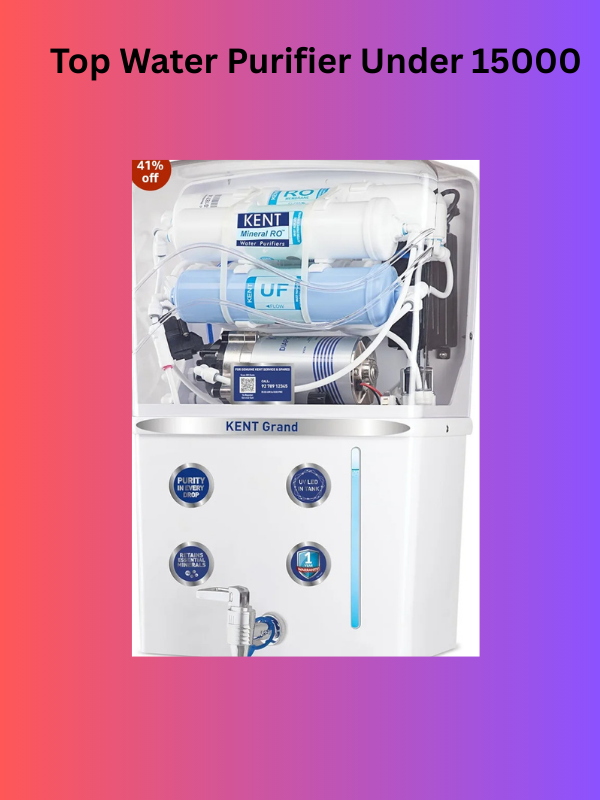
1. Urban Company Native M1 and M2
Best RO Water Purifier in India with least AMC in the market. (₹5,000 for 2 Years)
Pros
- Lowest AMC cost in its class — ₹5,000 for 2 years, including filters.
- 2-year product warranty on both models
- 8L storage tank with 10-stage RO+UV (+copper/alkaline) purification.
- Solid build quality and modern, compact design.
- Tray for holding bottles or glasses while filling.
Cons
- M2 cannot dispense water without electricity.
- Service is excellent in cities and some towns but slower/poor in rural areas with third-party technicians.
- Water wastage is high
This Reverse Osmosis system stands out for its minimal upkeep expenses and consistent dependability. For those residing in locations with an inconsistent electrical grid, the M1 is the ideal, resilient choice. However, if you have a steady power supply and prefer a modern interface featuring a digital touch display and automated volume settings, the M2 is the superior upgrade.
One of the primary advantages of the UC Native lineup is its transparent and stable upkeep expenses. With a biennial maintenance plan priced at ₹5,000, users receive comprehensive coverage for scheduled filter replacements and expert technician visits. Throughout our 24-month evaluation, the hardware has proven remarkably durable, and the water’s flavor profile has remained uniform, regardless of seasonal shifts in input quality.
Featuring a comprehensive 10-step filtration process, this system is specifically engineered to treat harsh water from tankers and borewells effectively. It is important to remember that UC Native units are intended exclusively for high-mineral content water exceeding 300 ppm. For lower TDS levels, a standard RO is generally unnecessary, except in cases where heavy metals like lead, arsenic, or fluoride are detected in the supply.
While both UC Native units feature an integrated drip tray for hands-free bottle support during refills, the M2 offers superior precision. Its advanced touch interface allows for one-touch dispensing, enabling users to automatically fill specific containers or glasses with exact, pre-defined volumes.
The main variation involves the water delivery mechanism. The M1 features a manual tap that operates regardless of electricity, making it a superior choice for regions with frequent blackouts. Conversely, the M2 utilizes a digital touch interface that requires a power connection to function, making it better for locations with a steady electrical supply. Beyond this interface difference, both units offer the same purification efficiency and tank capacity.
The level of support you receive is largely dictated by your geography. Within major urban hubs, Urban Company utilizes its in-house specialists for setup and repairs, ensuring a high standard of care. Conversely, in more remote or rural regions, they often outsource tasks to external contractors, which may lead to inconsistent quality or delayed visits. If you reside in a zone covered directly by their internal team, these units represent some of the most budget-friendly and high-value options available today.
| Water Purifier Model | Purifier Type | Key Point |
|---|---|---|
| UC Native M1/M2 | RO UV Copper Minerals | AMC ₹5,000 for 2 years (lowest in this list) |
| Atomberg Intellon | RO UV UF Minerals | Low Filter Prices, Manual TDS Setting via App |
| Pureit Revito Prime | RO UV MF Minerals | Better taste + lower water wastage |
| Sure from Aquaguard Delight NXT | RO UV | Best RO Under 8,000 |
| Kent Supreme Alkaline | RO UV UF Alkaline, Copper TDS Controller | Alkaline Water with PH 8 |
| AO Smith Z9 Pro | RO, SCMT Copper Minerals | Steel Tank + Hot water |
| Pureit Wave Pro, Prime, Plus | RO UV UF Minerals | Compact Design, Good water taste, Budget Pricing |
| Aquaguard Ritz Pro | RO UV UF Copper Minerals | Stainless Steel Tank + 2 year filter life |
| Livpure Allura Premia | RO UV UF Copper Minerals | 2.5 Years Free service including filters |
| Aquaguard Blaze Insta Hot | RO UV Copper Minerals | Dual Steel Tank + Hot water |
| Column 1 | Column 2 | Column 3 |
|---|---|---|
| Row 1 | Data | Data |
| Row 2 | Data | Data |
| Row 3 | Data | Data |
| Row 4 | Data | Data |
| Row 5 | Data | Data |
| Row 6 | Data | Data |
| Row 7 | Data | Data |
| Row 8 | Data | Data |
| Row 9 | Data | Data |
| Row 10 | Data | Data |
| Water Purifier Model | Purifier Type | Key Point |
|---|---|---|
| UC Native M1/M2 | RO UV Copper Minerals | AMC ₹5,000 for 2 years (lowest in this list) |
| Atomberg Intellon | RO UV UF Minerals | Low Filter Prices, Manual TDS Setting via App |
| Pureit Revito Prime | RO UV MF Minerals | Better taste + lower water wastage |
| Sure from Aquaguard Delight NXT | RO UV | Best RO Under 8,000 |
| Kent Supreme Alkaline | RO UV UF Alkaline, Copper TDS Controller | Alkaline Water with PH 8 |
| AO Smith Z9 Pro | RO, SCMT Copper Minerals | Steel Tank + Hot water |
| Pureit Wave Pro, Prime, Plus | RO UV UF Minerals | Compact Design, Good water taste, Budget Pricing |
| Aquaguard Ritz Pro | RO UV UF Copper Minerals | Stainless Steel Tank + 2 year filter life |
| Livpure Allura Premia | RO UV UF Copper Minerals | 2.5 Years Free service including filters |
| Aquaguard Blaze Insta Hot | RO UV Copper Minerals | Dual Steel Tank + Hot water |